Saudi Consumers Signal Readiness for NEVs as Al-Futtaim Survey and White Paper Chart the Path Forward
Published
4 min read
Saudi Consumers Signal Readiness for NEVs as Al-Futtaim Survey and White Paper Chart the Path Forward
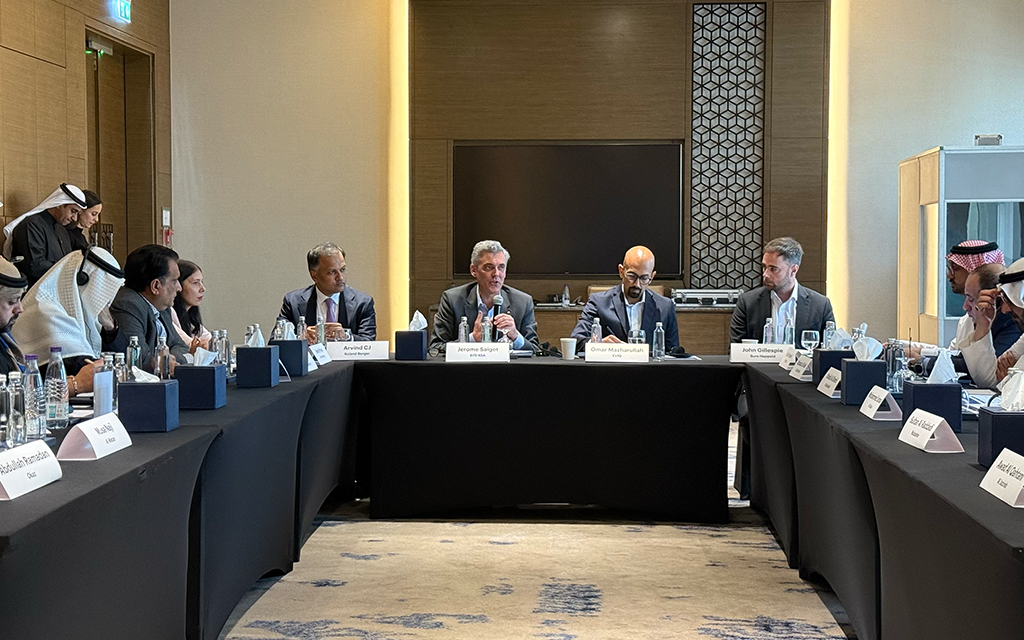
Riyadh, Saudi Arabia; 2 February 2026: Al-Futtaim has released ‘The Future of Mobility in Saudi Arabia’, a new white paper examining the Kingdom’s mobility transformation and outlining the coordinated steps needed to turn Vision 2030 ambition into widespread adoption of new energy vehicles and integrated transport solutions. Developed in partnership with EVIQ, Roland Berger and Buro Happold, the white paper is informed by a survey of more than 1,000 Saudi-based consumers and a multi-stakeholder industry roundtable convened by Al-Futtaim in the Kingdom.
Findings from Al-Futtaim’s inaugural ‘Future of Mobility in Saudi Arabia’ survey of more than 1,000 Saudi-based consumers signal strong consumer readiness: 71% of respondents are familiar with NEV technology and 79% are likely to consider purchasing an NEV as their next vehicle. However, adoption remains early, with 85% still driving petrol or diesel vehicles, highlighting the gap between intent and market reality.
The survey highlights a clear gap between consumer intent and market reality. While lower cost of ownership and environmental impact are key priorities, affordability remains the biggest barrier, with 30% citing purchase price as their main concern, followed by charging access (19%) and driving range (14%). Long charging times, range confidence, spare parts availability and limited familiarity with NEV technology also continue to slow adoption.
These findings underpin Al-Futtaim’s newly released white paper, ‘The Future of Mobility in Saudi Arabia’, which outlines a roadmap to accelerate NEV adoption and build a cleaner, smarter and more resilient mobility ecosystem aligned with Vision 2030.
As Saudi Arabia advances urban development and industrial diversification, mobility is increasingly seen as a driver of productivity and quality of life. The white paper notes that progress may slow if electrification, charging infrastructure and public transport continue to evolve in silos, underscoring the need for integrated planning and coordinated action.
Jerome Saigot, Managing Director of Al-Futtaim BYD KSA, said: “Saudi Arabia has set a clear direction for future-ready mobility through Vision 2030. The priority now is to connect the elements: vehicles, charging infrastructure, consumer awareness and service capability to build confidence and enable the large-scale adoption of new energy vehicles.”
Omar Mazharullah, Chief of Staff at EVIQ said: “National charging infrastructure is a core enabler for scaling EV adoption across the Kingdom. In addition, consumer confidence, regulatory support, and alignment of infrastructure deployment with urban growth, are critical elements to sustaining long-term EV adoption.”
Arvind CJ, Partner at Roland Berger said: “As Saudi Arabia’s automotive sector transitions toward a more localized and technology-enabled model, the foundations for large-scale NEV adoption are in place. The key challenge now is execution while ensuring affordability, infrastructure rollout, and localisation move in step. Coordinated policy and investment, combined with new ownership models, will determine how quickly consumer interest translates into sustained market adoption.”
John Gillespie, Director – Transport & Mobility at Buro Happold said: “A future-ready mobility system requires planning that is integrated from the start, linking charging, power capacity, land use, user behaviours and public transport into one coherent approach. Designing for reliability, accessibility and long-term scalability will be essential to support Saudi Arabia’s mobility ambitions under Vision 2030.”
Three themes emerge strongly from the survey findings and roundtable discussions. First, Saudi consumers are actively redefining mobility demand, with rising interest in NEVs, digital-first services and flexible ownership models. Second, innovation across charging networks, smart infrastructure and connected platforms is expanding the potential for safer and more efficient transport systems. Third, as cities grow and logistics intensify, integrated planning is essential to reduce congestion, improve air quality and support high-performance urban environments.
Together, these themes underline that scaling NEV adoption will require coordinated progress across affordability, localisation, infrastructure readiness and consumer confidence.
The white paper highlights that improving vehicle affordability alone will not be sufficient to close the adoption gap. While falling battery costs and increased competition are expected to reduce prices over time, widespread uptake will also depend on visible and reliable charging infrastructure, transparent pricing, strong after-sales networks and sustained consumer education.
Localisation is positioned as a critical success factor. Strengthening domestic manufacturing, supply chains and technical skills can improve affordability and resilience, supporting Vision 2030’s industrial ambitions.
Charging infrastructure is identified as a foundational enabler of NEV adoption. The paper notes ongoing expansion across major cities and intercity corridors, alongside the importance of managing the transition to paid public charging in a way that maintains trust. Advances in ultra-fast charging technologies are highlighted as a potential inflection point, provided deployment is coordinated within a coherent national framework.
The white paper outlines three scenarios for how NEV adoption in Saudi Arabia could evolve, depending on the pace of localisation, infrastructure rollout and policy alignment.
- Accelerated take-off: Local manufacturing scales rapidly, supported by competitive production, falling battery costs and innovative ownership models such as leasing or subscriptions. Charging infrastructure expands across urban and peri-urban areas, driving mass-market adoption.
- Cautious uptake: Infrastructure grows steadily, and public familiarity improves, but affordability remains a constraint. Adoption progresses gradually, led by early adopters and fleet operators, with broader uptake dependent on further cost reductions and flexible financing models.
- Delayed momentum: Regulatory delays, slow localisation or supply-chain constraints limit price reductions and infrastructure scale. Adoption remains confined to niche segments, leaving uptake below national ambitions.
Across all scenarios, the white paper identifies coordinated action as the decisive factor. Alignment between policy, infrastructure deployment, manufacturing localisation and consumer engagement will determine whether ambition translates into scale.
‘The Future of Mobility in Saudi Arabia’ concludes that collaboration across government, industry and operators will be central to accelerating NEV adoption. By aligning investment, innovation and urban development, Saudi Arabia can establish a globally competitive and sustainable mobility ecosystem.
Explore the full findings and recommendations in The Future of Mobility in Saudi Arabia white paper here.
More news