Resilience in Motion – An Al-Futtaim Logistics White Paper
Published
4 min read
Resilience in Motion – An Al-Futtaim Logistics White Paper
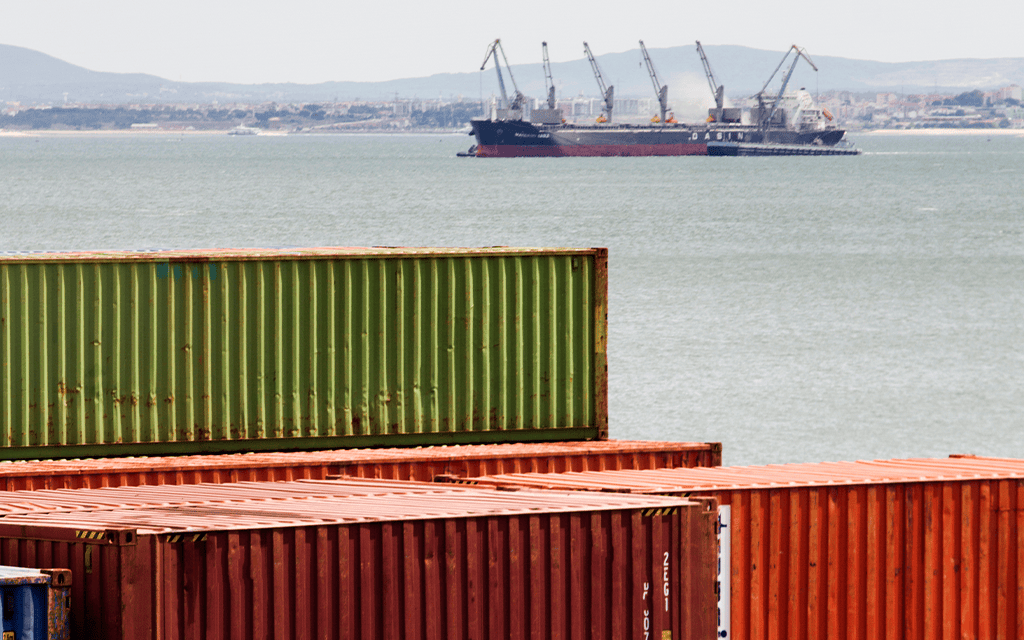
The Gulf’s automotive supply chains have rarely been tested as suddenly, or as severely, as in March 2026. The pressure on the Strait of Hormuz triggered widespread disruption across ocean carrier networks, shutting down the region’s principal finished-vehicle entry points overnight and putting production continuity and dealer stock across five markets under significant pressure.
Against this backdrop, Al-Futtaim Logistics has developed Resilience in Motion, a new white paper that examines how the region’s finished-vehicle supply corridors were restored within weeks rather than months, and what that response demonstrates about designing resilient logistics networks under live operational pressure.
The paper draws on Al-Futtaim’s direct experience establishing three parallel gateways outside the strait: a revived corridor through Port Sultan Qaboos in Muscat, a new deep-water entry point at Khorfakkan, and an international trans-shipment route from Hambantota, Sri Lanka. Together, these routes moved over 25,000 finished vehicles into the UAE, Qatar, Bahrain, Kuwait and Saudi Arabia, and supported OEMs in returning to full production capacity. Three themes emerge strongly from that experience.
First, pre-positioning matters more than improvisation. Al-Futtaim’s existing resilience strategy (five ports, five countries, one team) meant the response moved from concept to first vessel discharge in weeks, not months.
Second, technology built alongside operations, not after them, sustains throughput at speed. A purpose-built AI-enabled logistics visibility platform, linking every vehicle’s VIN to its driver, model, destination and distributor, was designed and deployed within 72 hours while operations were already live.
Third, resilience depends on local capability and multi-jurisdiction coordination running in parallel. Each corridor carried its own customs regime and regulatory constraints; sustained throughput at Muscat, in particular, depended on transferring knowledge to local teams rather than running the corridor remotely.
The paper also sets out the operating principles behind the response, from treating infrastructure gaps as solvable at pace, to designing for multiple jurisdictions concurrently, offering a repeatable framework rather than a single contingency fix.
The pressure on the Strait of Hormuz may not be the last disruption to affect regional supply chains. This case study offers the logistics and ports sector a practical reference for what readiness looks like in practice: corridors pre-positioned ahead of need, supporting technology built under pressure, and local capability developed so a route stays resilient once the initial response has passed.
Download our white paper to explore the full insights.
More news