How Enterprises Are Adopting AI at Scale: A Practical Guide for Large Organisations
Published
4 min read
How Enterprises Are Adopting AI at Scale: A Practical Guide for Large Organisations
What Does “AI-Empowered” Actually Mean at a Company Our Size?
AI is everywhere, and enterprises are now entering a new phase focused on autonomous and agentic capabilities. But for large organisations, the real challenge is moving from ambition to application; turning AI investment into measurable business value.
This shift is increasingly being reflected at a national level. The recent announcement by His Highness Sheikh Hamdan bin Mohammed bin Rashid Al Maktoum to accelerate AI adoption across the private sector signals a clear direction: AI is becoming central to how organisations operate, compete, and grow.
For a business like Al-Futtaim, with more than 40,000 colleagues across multiple industries, becoming AI-empowered means translating that ambition into real outcomes across customer experience, operations, and workforce productivity.
What “AI-Empowered” Really Means
An AI-powered organisation uses artificial intelligence across its operations, customer experience, and decision-making to improve efficiency, personalise services, and drive value at scale.
At Al-Futtaim, this means embedding AI into how the business operates, not as a standalone initiative, but as a core capability.
AI augments decision-making rather than replacing it. When combined with human judgement and experience, it enables faster, more informed outcomes, while automation improves consistency and efficiency across processes.
Crucially, the differentiator is adoption at scale. The organisations creating real value from AI are those that move beyond pilots and embed AI into everyday workflows, supported by a strong data-driven culture.
What Is Agentic AI and How Are Enterprises Starting to Use It?
One of the fastest emerging trends in enterprise AI is Agentic AI — AI systems capable of planning and executing multi-step workflows autonomously, beyond simple prompt-response interactions.
Unlike a traditional chatbot that answers a single question, an AI agent can research, decide, take action, and report back with limited human intervention. This represents a significant shift from AI as a tool that supports tasks to AI as a capability that can independently manage parts of a workflow.
Enterprise adoption is accelerating rapidly. According to Writer’s 2026 Enterprise AI Survey, 97% of executives say their company deployed AI agents in the past year, while 52% of employees already use them in some form. McKinsey research also found that 23% of enterprises are already scaling agentic AI solutions, with a further 39% actively experimenting with them.
Initial deployment is happening in areas where workflows are repetitive, information-heavy, and process-driven, including IT service desks, knowledge management, customer support, and sales prospecting.
At Al-Futtaim, Agentic AI already forms part of the organisation’s broader AI capability-building agenda. Through practical workshops, leadership programmes, and hands-on learning initiatives, employees are increasingly being exposed to how AI agents can support productivity, decision-making, and operational efficiency across the business.
Key Areas Where AI Drives Impact
AI in Customer Experience
AI is transforming customer experience by enabling personalisation at scale and helping organisations respond faster and more intelligently to customer needs.
Across Al-Futtaim’s businesses, AI supports tailored recommendations, targeted engagement, and AI-powered customer service across retail, automotive, and healthcare customer journeys. Platforms such as Blue also create opportunities to better connect experiences across brands and touchpoints, helping deliver more relevant engagement at scale.
AI also enables better understanding of customer behaviour across digital and physical channels, helping organisations create more seamless experiences, strengthen loyalty, and improve long-term customer relationships.
AI in Operations & Efficiency
AI in operations is helping organisations improve efficiency, reduce costs, and make faster operational decisions.
Across Al-Futtaim’s businesses, AI supports supply chain optimisation, inventory planning, and predictive analytics to improve forecasting and smarter resource allocation. In retail environments, technologies such as AI-driven forecasting and inventory planning are creating new opportunities to respond more effectively to changing customer demand, while in automotive operations, predictive maintenance helps reduce downtime and improve service performance.
AI also has growing applications in logistics and last-mile delivery optimisation across large-scale retail and distribution networks, including operations such as IKEA delivery services and Al-Futtaim Logistics.
AI in Sales & Marketing
AI in sales and marketing enables smarter targeting, faster decision-making, and more personalised engagement at scale.
By analysing customer behaviour, market trends, and purchasing patterns, AI supports segmentation, campaign optimisation, and demand forecasting. Across Al-Futtaim’s diverse portfolio of brands and businesses, this creates opportunities to deliver more connected and relevant customer experiences across multiple sectors and touchpoints.
Connected platforms such as Blue also demonstrate the growing potential for businesses to better understand customer preferences across brands, channels, and services. This supports more seamless customer journeys, stronger engagement, and improved allocation of marketing investment.
AI in HR & Talent
AI is also reshaping workforce strategy and how organisations build future-ready teams.
From AI in recruitment to workforce planning, organisations can identify skills gaps, improve hiring decisions, and better anticipate future capability needs. Tools such as Joule are also creating new opportunities to support productivity, knowledge access, and more efficient ways of working across organisations.
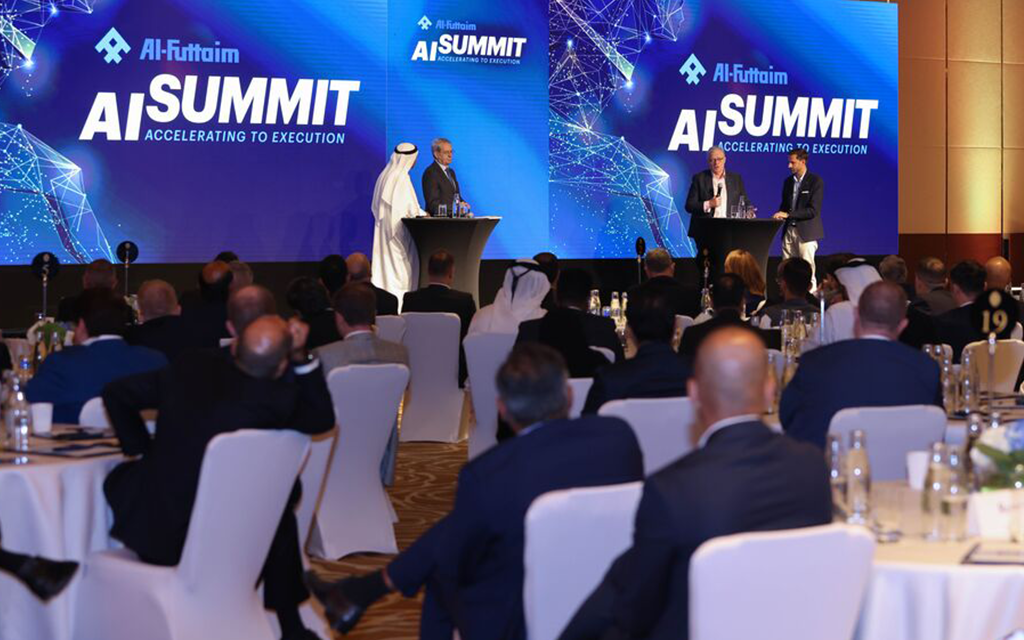
At Al-Futtaim, this transformation is being supported through tailored, individualised, company-wide AI learning plans, alongside leadership bootcamps, AI Weeks, AI Summits, Agentic AI workshops, and practical, targeted hands-on learning programmes focused on real business application.
Challenges of Becoming AI-Empowered
Enterprise AI adoption comes with challenges.
Data silos, legacy systems, and fragmented infrastructure can limit impact. More importantly, organisations must address the human dimension: redesigning workflows, clarifying decision-making, and building trust.
Without this, AI initiatives risk remaining in pilot phases rather than delivering value at scale.
Building an AI-Ready Organisation
Becoming AI-ready requires both strong technology foundations and organisational capability.
At Al-Futtaim, investments in cloud, data platforms, and scalable digital infrastructure are enabling AI adoption across the business. Alongside this, organisation-wide learning initiatives — including leadership bootcamps, AI Weeks, AI Summits, and Agentic AI workshops — are helping build practical capability and accelerate adoption responsibly at scale.
Supported by a growing network of AI champions and catalysts, the focus is on embedding AI into day-to-day operations effectively and responsibly.
The Future: Embedding AI into Enterprise Culture
The next phase of digital transformation is not just about deploying AI tools, but embedding AI into the culture, workflows, and decision-making processes of the organisation.
As adoption accelerates, competitive advantage will increasingly come from how effectively organisations combine technology, talent, and organisational readiness at scale.
For Al-Futtaim, the focus is clear: building practical capability, driving responsible adoption, and ensuring AI delivers meaningful value for customers, employees, and the business.
Being AI-empowered is not about technology alone. It is about how organisations adopt AI in business to improve performance, enhance customer experience, and empower employees.
For companies like Al-Futtaim, the focus is clear: move from ambition to application, scale AI adoption, and deliver measurable value across the organisation.