AI Adoption Is Surging Across the GCC Workforce, But the Readiness Gap Poses a Pressing Challenge for Employers
Published
4 min read
AI Adoption Is Surging Across the GCC Workforce, But the Readiness Gap Poses a Pressing Challenge for Employers
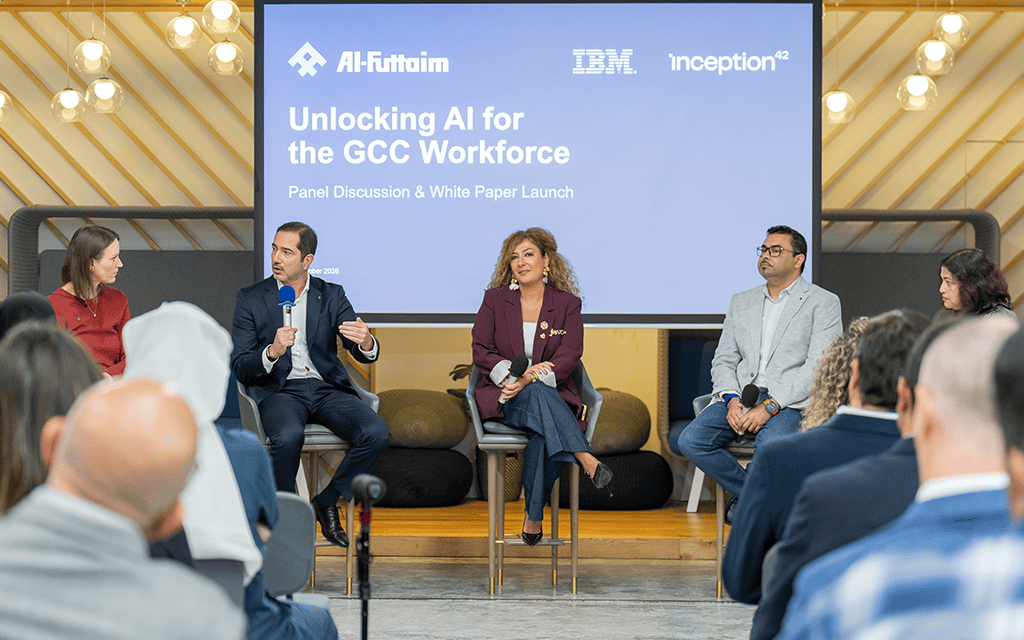
Dubai, United Arab Emirates; 22 October, 2026: The GCC workforce has embraced artificial intelligence at remarkable speed, with more than four in five professionals now using AI at least weekly and one in three using it every day. But while adoption is accelerating across the region, workforce readiness is struggling to keep pace, according to a new study released by Al-Futtaim.
Unlocking AI for the GCC Workforce is Al-Futtaim’s largest study of AI adoption across the GCC consumer economy. Based on a survey of 1,143 professionals across six GCC markets, the research explores how employees are adopting AI, where confidence and capability gaps remain, and what organisations need to do to unlock the technology’s full potential. The study includes professionals working across sectors including technology, automotive, healthcare, retail, consumer goods, hospitality and electronics. In addition to the research findings, the report features perspectives from IBM, Microsoft and Inception42 (a G42 company) on the opportunities and challenges shaping AI adoption across the region.
The findings suggest that the GCC faces not only an AI adoption challenge, but also a workforce readiness challenge. While 82% of professionals surveyed use AI daily or at least weekly and 73% report improved productivity, only 39% describe themselves as highly confident using the technology. More than half of organisations actively encourage AI use, yet only around one in five employees report receiving extensive AI training, creating what the research identifies as an “AI Readiness Paradox”, where organisations are accelerating adoption faster than they are building workforce capability.
The study identifies AI training as the single strongest predictor of successful adoption. Employees who have received extensive training are 2.5 times more likely to feel highly confident using AI than untrained colleagues, report significantly greater productivity gains and are almost twice as likely to save four or more hours each week through AI. Yet one in four professionals say they have received no formal AI training from their employer, highlighting a significant opportunity for organisations to strengthen workforce capability.
Beyond training, the research highlights leadership as one of the strongest drivers of AI adoption. Organisations with a formal AI strategy report significantly higher workforce confidence and clearer role-specific guidance, while workplaces where senior leaders actively use AI see employee adoption rates three times higher than those where leadership engagement is limited.
The study also uncovers one of its most unexpected findings: while training improves almost every aspect of AI adoption, it does little to reduce concerns around data security. Around a third of respondents identify data security as their biggest barrier to using AI, regardless of age, seniority, industry or training level, suggesting organisations must strengthen governance and responsible AI frameworks alongside workforce skills.
Another significant finding is that AI capability is not being developed evenly across the workforce. Nearly half (47%) of professionals aged 45 and above report receiving no formal AI training from their employer, the highest rate of any age group, while frontline employees and workers in smaller organisations are also significantly less likely to receive structured AI development despite playing critical roles in customer experience and day-to-day operations.
Moza Al Futtaim, Chief AI Officer, Al-Futtaim, said: “Across the GCC, organisations are adopting AI with real momentum, and the opportunity now is to match that momentum with readiness. Organisations that succeed are those investing in their people alongside technology, equipping employees at every level with the skills and confidence to use these tools, and fostering a culture of continuous learning. As AI transforms the way we work, we want to ensure our people are actively shaping that change. Our focus must be not only on keeping pace with change, but also on equipping people to lead and influence it.”
Lula Mohanty, Managing Partner, IBM Middle East & Africa, said: “Many of the themes highlighted in the report are consistent with what we are seeing across organisations in the region: AI adoption alone does not create business value. Success comes when organisations redesign how work gets done, equip their people with the right skills and build trust alongside technology. At IBM, our own AI transformation experience has demonstrated the importance of combining technology with process redesign and workforce enablement to realise business value.”
Ibrahim AlJallaf, COO, Inception42, said: “Most companies drop AI into workflows designed for people, then wonder why the gains are marginal. Real impact comes when workflows are re-imagined with AI and the human at the center of it. That kind of change doesn’t come from technology; it comes from the people who know the processes well enough to question it. This is what makes AI deployment effective and brings about adoption at scale.”
The white paper concludes that the next phase of AI transformation across the GCC will not be determined by access to technology, but by how effectively organisations turn adoption into meaningful business impact. This requires a shift from investing in more technology to building the right skills, organisational structures and data foundations, while rethinking how AI is integrated into everyday operations and measuring its impact beyond productivity gains.
More news